
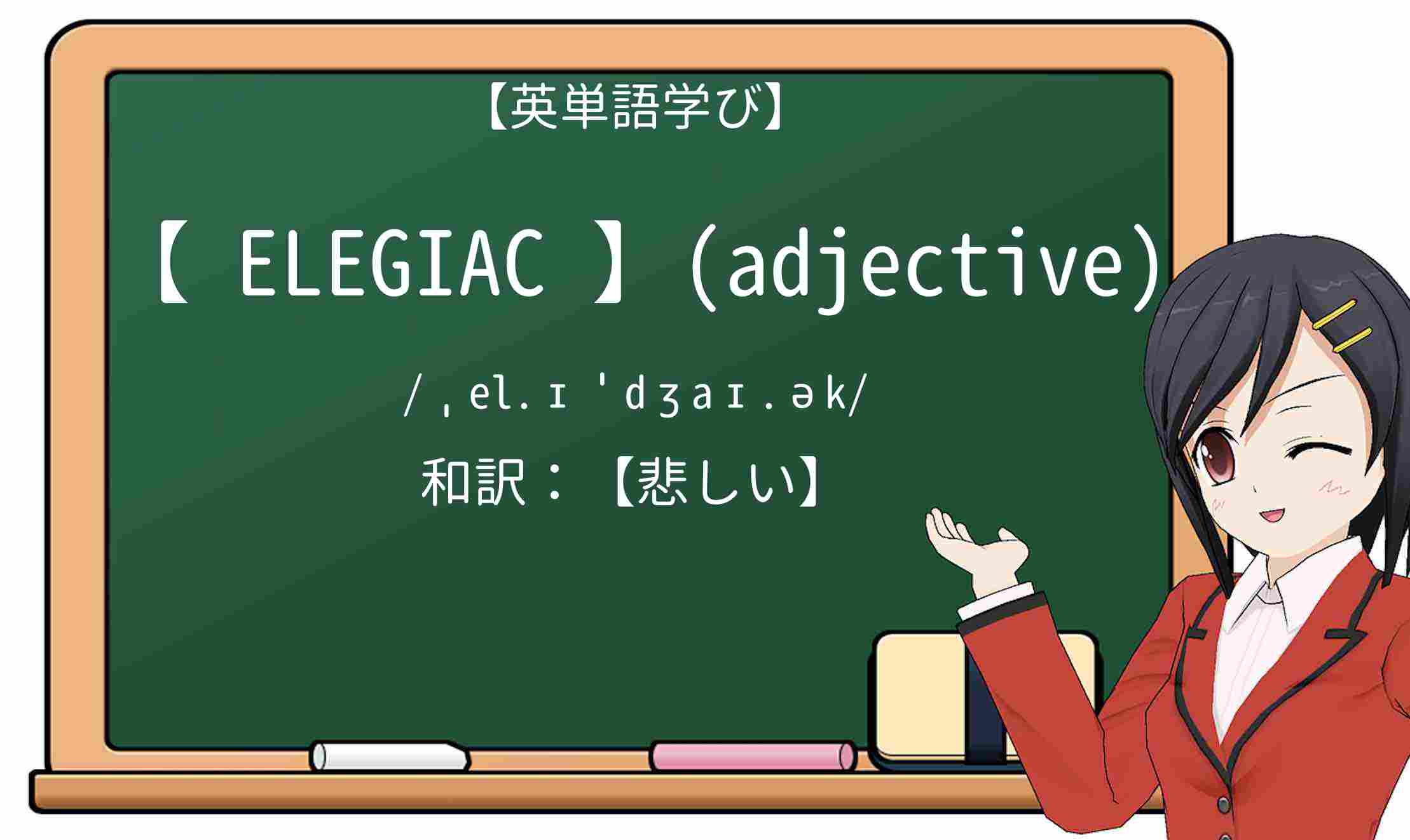
「elegiac」の意味(adjective)
品詞(英単語での分類):形容詞
文学【エレジーにまつわる】意味として使われています。
和訳:【悲しい】
参考:「elegiac」の例文一覧
「elegiac」のネイティブ発音(読み方)を聞きましょう!
読み方は【ˌel.ɪˈdʒaɪ.ək】です。下記動画を聞きながらˌel.ɪˈdʒaɪ.əkを大声で発音しましょう
【絶対聞こう】アメリカ人が「elegiac」の意味について解説】!
「elegiac」の類語一覧です。順番に覚えましょう!
対義語・反対語一覧を覚えることで、elegiacの単語を使いこなしましょう!
「elegiac」は複数の異なる意味を持った英単語です。それぞれの意味と使い方などを例文から解説しましょう!
| 英語 | 意味(和訳) | 詳しく解説! |
|
elegiac,
elegiacal |
エレジー風の、哀調に満ちた | (mournful, like an elegy) |
| The night was quiet, but we could hear a bird’s elegiac call across the water. | ||
| その夜は静かだったが、鳥の哀愁を帯びた鳴き声が海の向こうから聞こえた。 | ||
elegiacの実際の意味・ニュアンス(挽歌?エレギーア韻律?を理解して、正しく使いましょう!
Burning incense, paid homage, read elegiac address.
焼香、敬意を表し、挽歌のアドレスをお読みください。
Nux (“The Walnut Tree”) This short poem in 91 elegiac couplets is related to Aesop’s fable of “The Walnut Tree” that was the subject of human ingratitude.
Nux (くるみ) エレギーア形式の91対句が伝わるヌクスは、アイソーポスの寓話集にあるクルミの木の寓話を下敷きにした内容を持つ。
Each work in its scale and narrative stakes a claim for its own elegiac cosmology, an encapsulation of time passing, grand ruins, prehistoric mythologies, eroticism and mortality which, subject to the collage process, builds complex, mythic and often ironic scenarios in the face of nature and technology.
それぞれの作品はそのスケールと物語において、哀愁を帯びた宇宙観、過ぎゆく時間の封入、壮大な廃墟、有史以前の神話、エロチシズムと死を主張する。それらはコラージュのプロセスによって、自然とテクノロジーに直面して複雑で神話的、かつしばしば皮肉なシナリオを構築する。
Critics have seen the poems as highly self-conscious and extremely playful specimens of the elegiac genre.
『愛の歌』はこれまでのところ、自意識に溢れ、非常に雄弁なエレギーア詩の作例であると評価されている。
The Ibis, an elegiac curse poem attacking an adversary at home, may also be dated to this period.
故国にいる敵を呪うエレギーア『イービス』もちょうど同じころに詠われた。
The Ibis is an elegiac poem in 644 lines, in which Ovid uses a dazzling array of mythic stories to curse and attack an enemy who is harming him in exile.
エレギーア韻律の644行の詩篇『イービス』(Ibis、鴇の歌)のなかでオウィディウスは目も眩むような神話的物語を並べ立て、追放中の詩人を傷つけようとする敵を呪い、攻撃する。
He advises women to read elegiac poetry, learn to play games, sleep with people of different ages, flirt, and dissemble.
さらにはいろんな年代の男と寝ること、浮気すること、そして、しらばっくれることをやってみなさいと言う。
The last elegiac couplet is translated: “Where’s the joy in stabbing your steel into my dead flesh? There’s no place left where I can be dealt fresh wounds.”
結びの対句は私の肉体を刺すあなたの鉄によろこびはどこにあるか?
The five books of the elegiac Tristia, a series of poems expressing the poet’s despair in exile and advocating his return to Rome, are dated to AD 9-12.
追放の身の絶望やローマへの帰還を切望する思いのたけを表現した一連の詩を集めた『悲しみの歌』五巻本は、西暦9年から12年の間に詠われた。
Afterward, Samuel Taylor Coleridge argued that the elegiac is the form “most natural to the reflective mind” and that it may be upon any subject, so long as it reflects on the poet himself.
その後、サミュエル・テイラー・コールリッジが、エレジーは思索にふける精神にもっとも自然な形であり、詩人自らが思索できるならどんなテーマでも構わないと主張した。
It was memorable how, during the latter part of this opera when it was first performed in Stuttgart, the strong, elegiac tone of the music mourning those who had met an untimely death seemed to well up from the depths.
シュトゥットガルトでの初演に接したこのオペラの後半で、災厄のなかで非命の死を強いられた者たちへの哀悼の強い調べが、深淵から湧き上がっていたことが思い出される。
Around 1:00 the next day, the deceased’s family, men will be buried in the backyard of the deceased grandmother’s house dug up in advance ready for release to the boxy coffin, the deceased’s coffin reference to grandmother house shape, with a new cut pine Dacheng, M for the 19 level, female 17 layers, about one meter length width coffin, at the top of Wei Ren-shaped, painted red, green and blue bottles with the appearance of lotus flower, ram’s horn flowers, conch, moon and stars, Pet Fishes and patterns, elegiac couplet To the Tibetan language, color, bright and beautiful scene.
午前一時頃、次の日は、故人の家族、男性は亡くなった祖母の家の裏庭には、事前に箱型の棺にリリースする準備を掘って、新しいカットの祖母の家の形に故人の棺の参照を、松の大成殿に埋葬される、Mは19レベルで、女性の17層、約1メートルの長さ幅の棺は、威廉の上部にある形で、、、緑、赤と青の挽歌連句ハスの花、羊の角の花、ホラ、月、星、ペット魚とパターンの外観を持つ瓶塗装チベット語の言語には、色鮮やかな美しい風景です。
目次
隠す