
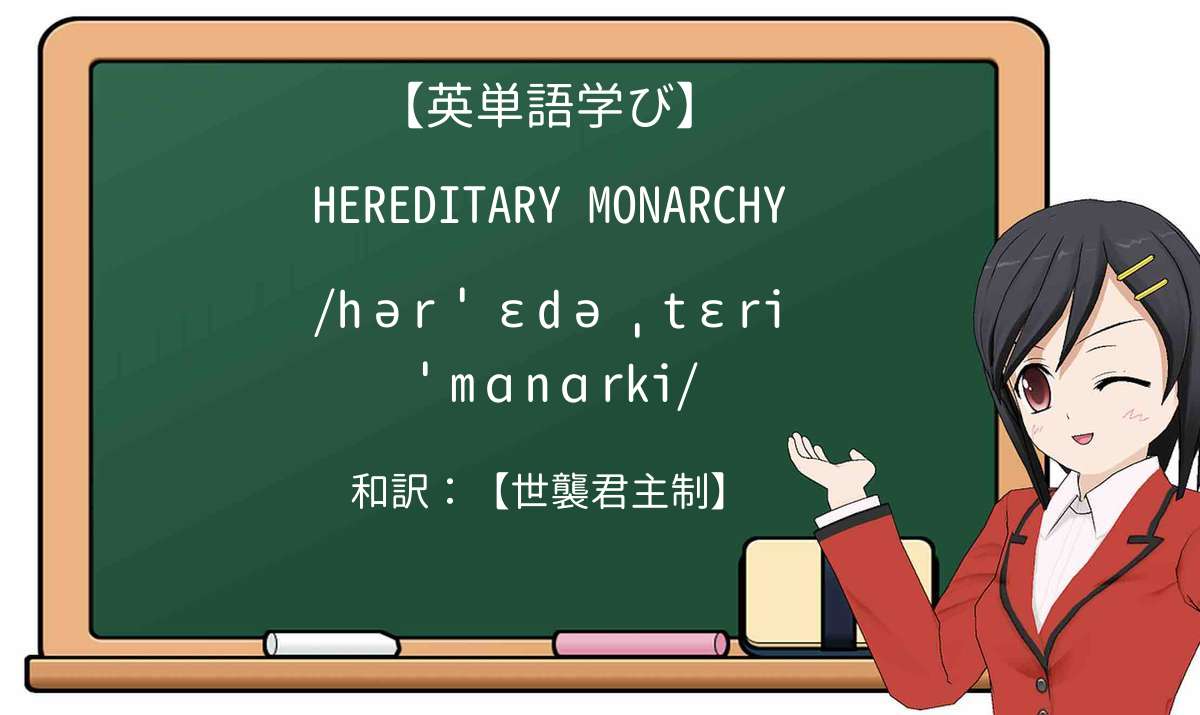
hereditary monarchyの意味について
「 hereditary monarchy 」は2つの英単語( hereditary、monarchy )が組み合わさり、1つの単語になっている英単語です。
- 「 monarchy 」は【国が国王または女王によって統治される統治制度、またはそれが起こる国】意味として使われています。
- 「 hereditary 」は【生まれる前に親から子に受け継がれる】という意味として使われています。
意味:【世襲君主制】
参考:「hereditary monarchy」の例文一覧

「hereditary monarchy」のネイティブ発音(読み方)を聞きましょう!
読み方は【hərˈɛdəˌtɛri ˈmɑnɑrki】です。下記動画を聞きながらhərˈɛdəˌtɛri ˈmɑnɑrkiを大声で発音しましょう
【絶対聞こう】アメリカ人が「hereditary monarchy」の意味について解説】!
hereditary monarchyの実際の意味・ニュアンスを理解して、正しく使いましょう!
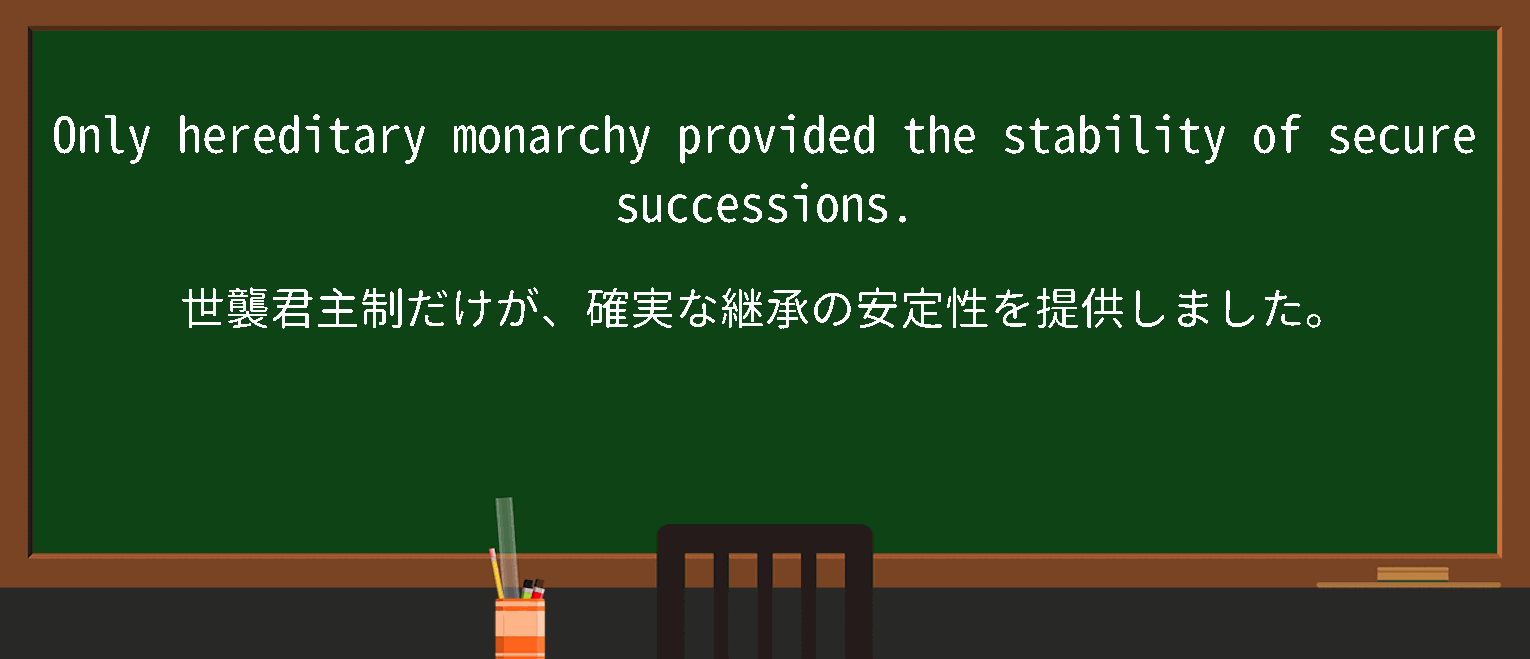
Under a hereditary monarchy, all the monarchs come from the same family, and the crown is passed down from one member to another member of the family.
世襲君主制の下では、全ての君主が同じ家系に属し、王位が血縁のある家族へと代々受け継がれていく。
Should Germany become a hereditary monarchy, have an elected monarch, or even become a republic?
ドイツは世襲君主国となるべきか、選挙君主制をとるべきか、あるいは共和国となるべきか。
The revolutionary Constitution recast the erstwhile Polish-Lithuanian Commonwealth as a Polish-Lithuanian federal state with a hereditary monarchy and abolished many of the deleterious features of the old system.
革命憲法は旧来のポーランド・リトアニア連合国家を世襲王制のポーランド・リトアニア連邦国家へと変貌させ、古いシステムが持つ有害な特徴を排除していった。